· By Milton Yan
Original announcement · Adapted for this blog on September 9, 2026
Zypher becomes a capstone project at NYU Tandon
Looking back at our Fall 2025 milestone: students using Zypher to build vertical AI agents as part of a three-credit capstone project.
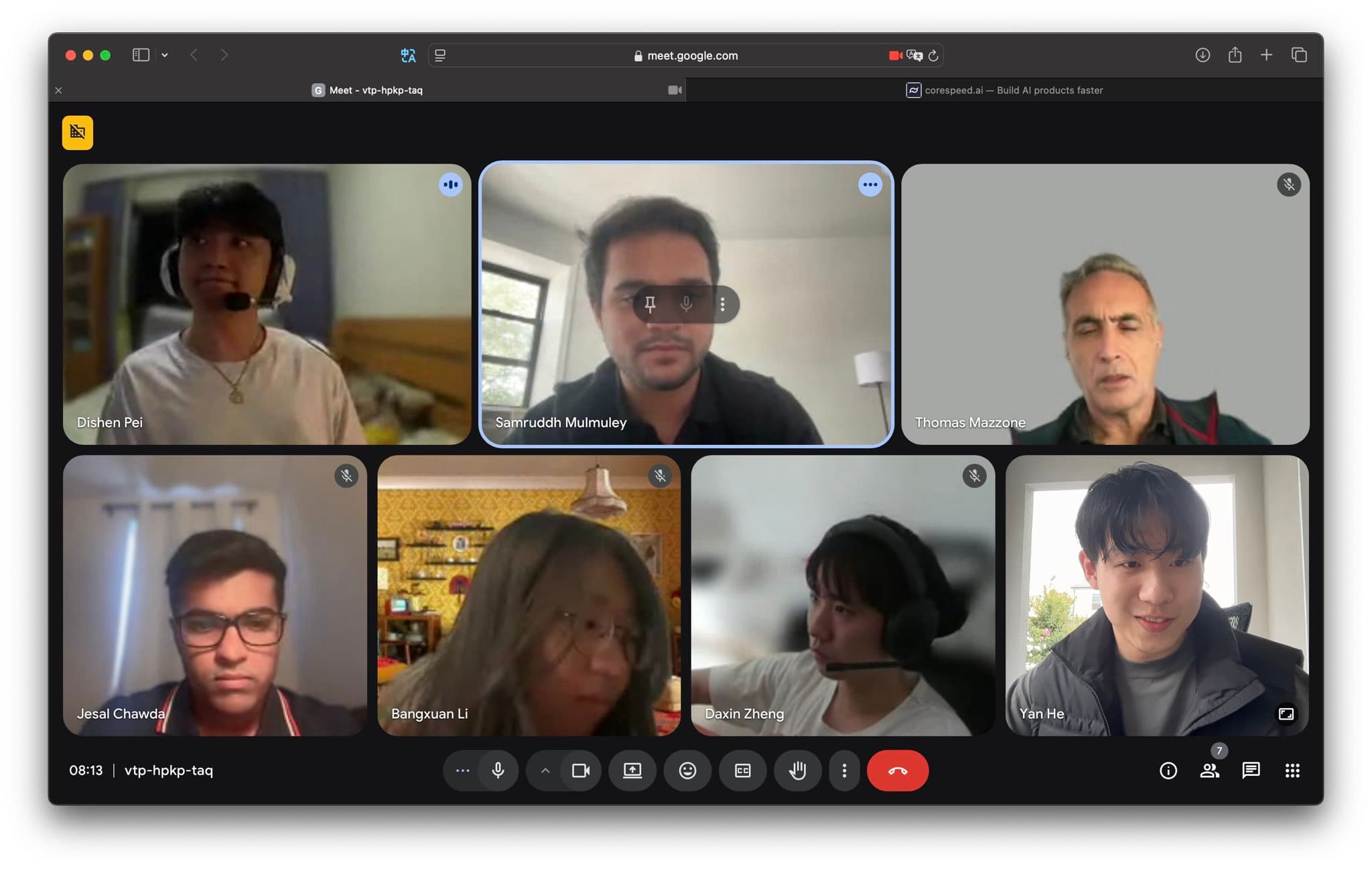
A group call screenshot from the October 2025 announcement.
In October 2025, we shared a milestone for CoreSpeed: our product Zypher had become a three-credit capstone course project at NYU Tandon School of Engineering.
I wanted to give that moment a more permanent home here. The original announcement was brief, but the project behind it captured something I care about as a builder: giving people a framework they can use to turn a specific problem into working software.
From a domain problem to a deployed agent
The project brief was titled CoreSpeed & NYU Vertical AI Agent Development Project. It asked students to identify a problem in a particular domain, use the Zypher Framework to build an AI agent as a solution, and deploy it online through the CoreSpeed platform.
That gave the work a concrete sequence:
- Choose a problem. Start with a need in a specific field.
- Build an agent. Use Zypher, described in the brief as an AI agent development framework, to implement a solution.
- Put it online. Take the project through deployment using CoreSpeed.

A project grounded in the course
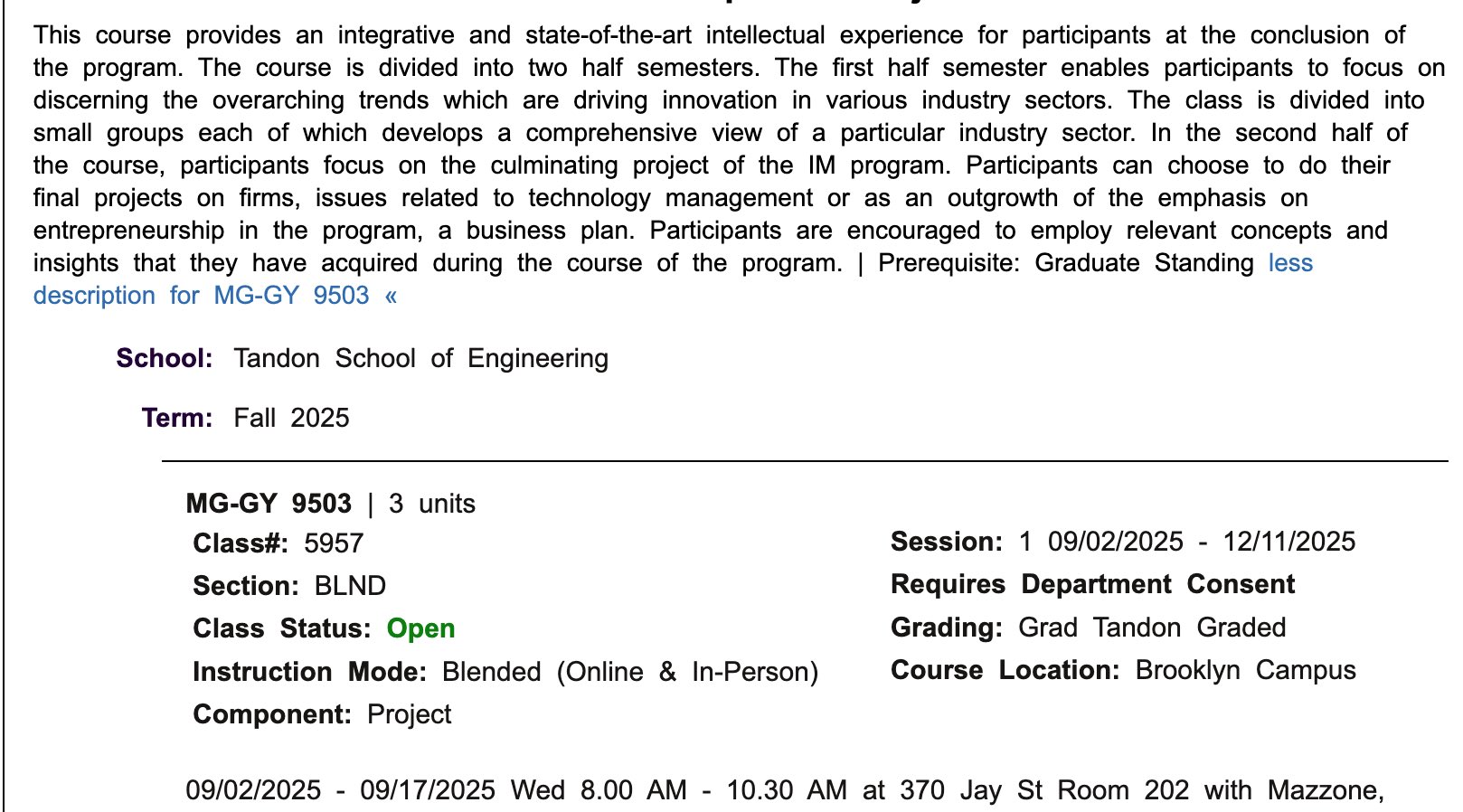
The course listing shared in the post was for MG-GY 9503, Fall 2025, at NYU Tandon. It listed three units, a project component, and blended online and in-person instruction at the Brooklyn campus.
The course description connected industry analysis with a culminating project. Students were encouraged to apply concepts from their program to questions involving firms, technology management, or entrepreneurship. The Zypher project offered a concrete setting for that work: choose a domain, define a problem, and build toward a usable solution.
Why this milestone mattered to me
For me, the meaningful part was the opportunity to put Zypher in the hands of people approaching problems from their own fields. A framework becomes more interesting when someone else decides what to build with it.
The project brief also kept deployment in the picture from the start. That is a useful habit for anyone learning to build agents: think about how a solution will be used while you are deciding what it should do.
Our original post included a group call screenshot, reproduced above, alongside the course and project materials. It also included a quieter glimpse of the workspace: a cat in front of a CoreSpeed screen and code. I like keeping both sides of that moment together—the formal project and the everyday surroundings of building it.

This post records the project as announced in Fall 2025. It is a milestone I am glad to have as part of our building story.
Read the original CoreSpeed announcement on X, published October 6, 2025. All four images here come from that post.